

When I first started my photography business, I thought the hardest part would be learning my camera.
I was wrong.
The technical side eventually became second nature. But building a business? That was a completely different story.
Over the years, I’ve made plenty of mistakes. I’ve questioned myself more times than I can count. I’ve celebrated big wins, learned some hard lessons, and discovered that the things that truly move your business forward usually aren’t the things people are talking about.
If I could sit down with every photographer who’s just starting out—or even someone who’s been doing this for years but feels stuck—there are a handful of truths I’d want to share.
Some might challenge the way you’ve been thinking.
Some might make you uncomfortable.
But every single one comes from experience, not theory.
These are the lessons that changed the way I run my business, serve my clients, and define success.
Here are five hard truths every senior photographer needs to hear.
1. Stop Building Someone Else’s Dream
This one might be hard to hear.
One of the biggest mistakes I made in my own business was believing that someone else had all the answers. I’ve invested in mentors, educators, courses, and coaching over the years. Some were incredible. Some completely changed the trajectory of my business. Others? They unintentionally pulled me further away from what I was actually trying to build.
Too often in this industry, education becomes, “Here’s how I did it, so this is how you should do it.”
But your business isn’t my business.
Your life isn’t my life.
Your goals aren’t my goals.
A mentor should absolutely challenge you, stretch you, and help you grow. But they shouldn’t mold your business into a copy of theirs.
For a long time, every time I followed advice that didn’t align with my heart, I found myself backtracking. I’d spend months trying to force strategies that looked amazing for someone else but felt exhausting or inauthentic for me. I’d second-guess myself because I assumed they knew better.
The funny thing is… every time I finally stopped, got quiet, and listened to my own instincts, my business started moving forward again.
That doesn’t mean you shouldn’t have a mentor.
It means you should choose one wisely.
The best mentors don’t hand you a blueprint and expect you to fit inside it. They ask questions. They help you uncover what matters most to you. They help you build a business around your strengths, your personality, your lifestyle, and your vision—not theirs.
Finding your vision takes time. It takes trial and error. It takes learning what lights you up and what drains you. That’s normal.
And if you find yourself constantly feeling like you’re building a business that doesn’t even feel like yours anymore, it may not be because you’re failing.
It may simply mean you’ve outgrown the advice you’re following.
Give yourself permission to pivot.
Give yourself permission to trust your gut.
Because at the end of the day, you’re the one who has to wake up every morning and run this business—not your mentor.
Build the business that makes you excited to show up every single day. That’s the one that has the greatest chance of lasting.

2. Not all feedback is good feedback.
One of the biggest mistakes I see photographers make is posting an image in a Facebook group and asking…
“What do you think?”
I’ve done it too.
The problem is that everyone giving feedback is looking at your work through the lens of their own style, their own clients, and their own market.
A natural light photographer will critique an off-camera flash image differently than someone who specializes in flash.
A photographer who edits bright and airy will see your rich, vibrant colors differently than someone whose work looks just like yours.
Someone photographing seniors in California may have completely different trends, locations, and client expectations than someone photographing seniors in North Carolina.
None of them are necessarily wrong.
They’re simply giving feedback based on what they would do—not what you’re trying to create.
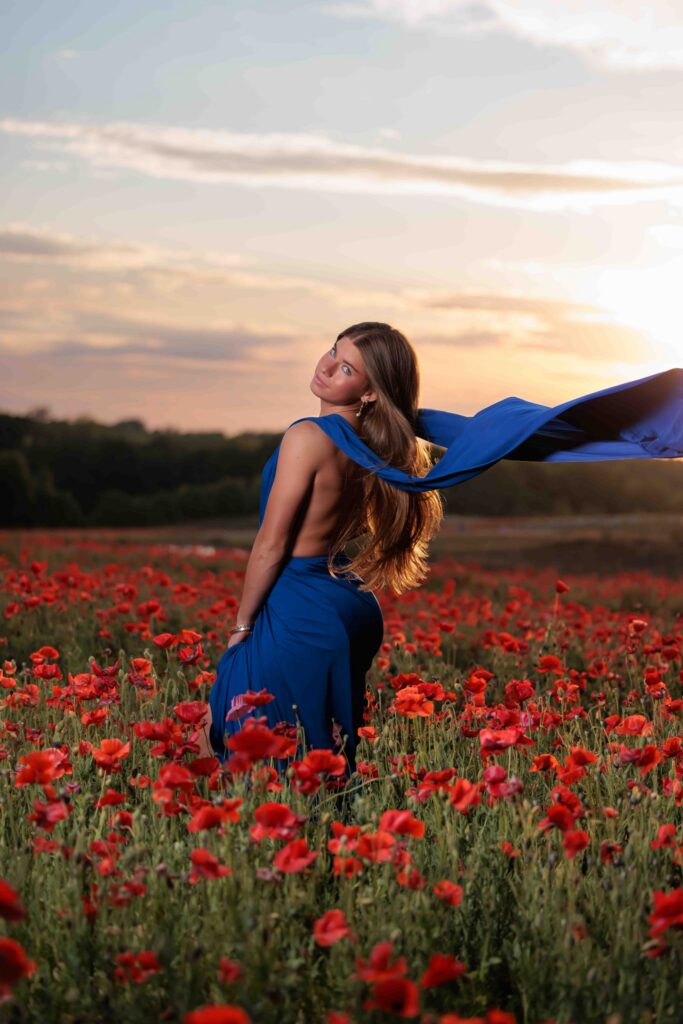
When you ask the wrong people for advice, you often walk away questioning everything. You start second-guessing your editing, your posing, your lighting, or even whether you’re good enough. Instead of growing, you end up frustrated and overwhelmed because you’re trying to satisfy opinions that were never meant for your business.
Art is subjective. There isn’t one right way to create an image.
Before you ask for feedback, ask yourself what you’re trying to accomplish with that photograph. Then find someone whose work, style, and ideal client align with yours. Better yet, tell them your goal before they critique it.
“I was trying to create a dramatic off-camera flash portrait.”
“I wanted this image to feel soft and emotional.”
“My goal was to capture personality more than perfect posing.”
That context changes everything.
I’ve also learned something else over the years.
Sometimes the most important critique comes from yourself.

Take a step back. Study your work honestly. Ask yourself what you love, what you would change, and where you can improve. Learning to evaluate your own work is one of the greatest skills you’ll ever develop because it teaches you to trust your own artistic eye instead of chasing everyone else’s approval.
And one last piece of advice…
Don’t ask for critiques on images of your own children or someone you’re deeply connected to.
Those photographs carry emotion. Any negative feedback is going to feel personal, and it will hit much harder than it would with a regular client. It’s difficult to separate your heart from your art in those moments.
Constructive feedback should challenge you. It should help you grow. It should never leave you feeling unworthy.
The right critique builds confidence.
The wrong critique tears it down.

3. Know your numbers before you know your prices.
This one isn’t glamorous.
It’s spreadsheets.
Receipts.
Taxes.
Subscriptions.
Insurance.
But it’s one of the most important lessons you’ll ever learn.
One of the biggest mistakes new photographers make is choosing their prices based on what everyone else is charging—or worse, charging whatever “feels” affordable.
The truth is, if you don’t know your cost of doing business, you don’t know if you’re making money.
Running a photography business is expensive.
Yes, cameras and lenses cost a lot. But that’s only the beginning.
There are memory cards to replace. Software subscriptions. Insurance. Website hosting. Marketing. Education. Client galleries. Editing programs. Travel. Gas. Studio rent. Product costs. Packaging. Office supplies. Credit card processing fees. The list goes on.
And don’t forget one of the biggest expenses of all—saving for the future.
Your camera won’t last forever. Lenses eventually need servicing or replacing. Computers become outdated. If you aren’t setting money aside now, replacing your gear when the time comes becomes incredibly stressful.
Then there are taxes.
Research what is required where you live. Do you need to collect sales tax? When are your taxes due? What expenses can you deduct? Missing deadlines or failing to collect the proper taxes can cost you unnecessary penalties and late fees.
Another mistake I see photographers make is absorbing costs that should be built into their pricing.
If a location charges a permit fee, that shouldn’t come out of your pocket.
If gas prices increase, that’s part of doing business.
Every expense matters.
Before you decide what to charge, sit down and calculate everything. Not just today’s expenses, but the ones you’ll have six months or even a year from now.
And don’t forget one very important line item…
Pay yourself.
You didn’t start a business just to cover expenses. Your business should support your life, your family, and your future.
Now, with all of that said…
Your prices also need to reflect your skill level.
It’s okay to be newer and spend time building your portfolio before charging premium prices. Practice your craft. Learn lighting. Master posing. Invest in education. Confidence comes from experience.
Just be careful not to fall into the trap of constantly photographing friends for free or offering endless discounts.
I’ve learned this lesson the hard way.
Sometimes people will happily accept free photos but never truly value the time, talent, and investment behind them. In some cases, people become accustomed to asking for favors instead of supporting your business.
A better option is to host intentional model calls.
Choose the location. Choose the styling. Have participants sign a model release, provide a small number of complimentary images, and give them the opportunity to purchase additional photographs if they’d like.
You still build your portfolio, but you’re doing it with purpose. You maintain creative control, attract people who genuinely appreciate your work, and avoid setting expectations that your photography is always free.
Your pricing isn’t just a number.
It’s the foundation that determines whether your business survives—or quietly drains your passion.
Know your numbers first.
Everything else becomes much easier after that.
4. Put in the work before you expect the results.
Here’s a hard truth…
Photography isn’t just about owning a nice camera.
It’s about putting in the work.
The photographers you admire didn’t wake up one day creating incredible images. They spent countless hours learning, practicing, failing, experimenting, and trying again.
If you want to grow, you have to be willing to do the same.
Research.
Practice.
Experiment.
Study.
Repeat.
Learn your camera inside and out. During a session isn’t the time to be guessing your settings or scrolling through your menu trying to figure out what to do next. You should know how to shoot in manual mode and confidently adjust your settings as the light changes throughout a session.
If you love a certain style of photography, immerse yourself in it.
Want to master off-camera flash? Learn everything you can. Watch tutorials. Invest in education. Practice until it becomes second nature.
Fun fact… when I was learning off-camera flash, I didn’t have someone standing in front of my camera every day. So I practiced on stuffed animals sitting on a stool. I practiced on my dog. I even bribed my assistant to stand there while I moved lights around and experimented. Was it glamorous? Not even close. But every time I practiced, I learned something new, and that confidence showed up when it mattered most—during a real session.
The same goes for editing.
Don’t rely on presets to create your style. Presets can be a great starting point, but they shouldn’t define your work.
Your editing should become so consistent and so uniquely yours that someone can recognize one of your images without ever seeing your logo.
That’s what branding through your art looks like.
Spend time developing your photographer’s eye.
Scout locations before your sessions. Notice how the light changes throughout the day. Learn where the best backgrounds are. Find hidden spots that other photographers overlook. Become the expert your clients are hiring.
Every session is an opportunity to improve.
Try a new lighting technique.
Experiment with a different composition.
Push yourself creatively.
Not everything will work—and that’s okay. Some of your greatest lessons will come from the images that didn’t turn out the way you hoped.
Growth doesn’t happen by accident.
It happens because you intentionally make time to learn.
That may mean investing in education. Taking a workshop. Finding a mentor. Reading books. Watching tutorials. Practicing after work when everyone else is relaxing.
No one can do that part for you.
The photographers who continue to grow aren’t always the most naturally talented.
They’re the ones willing to keep showing up, staying curious, and putting in the work long after everyone else has quit.
Because at the end of the day, talent might get you started…
But hard work is what makes you unforgettable.
5. People don’t just book your photography. They book you.
Have you heard the saying…
“People book people.”
It’s true.
Of course your images matter. Your website matters. Your editing matters. Your experience matters.
But at the end of the day, your clients are trusting you with some of the biggest moments of their lives.
Especially with senior photography, this experience becomes personal.
You aren’t just showing up, taking pictures, and sending a gallery. You are spending hours with someone during a season of life they will never get back. You are celebrating who they are, helping them feel confident, and creating memories along the way.
My clients don’t just know my photography.
They know me.
And I’ll be honest… this wasn’t always easy for me.
Early on, I felt like I had to prove myself. I was nervous about saying the wrong thing. I worried about impressing people instead of simply being myself.
But somewhere along the way, I realized something important…
The best connections happen when you stop trying to be impressive and start being genuine.
Now, when I get on a FaceTime call with a senior and their mom, I approach it like we are already friends sitting down for coffee.
One of my favorite things to do is ask my senior a simple question:
“Tell me how awesome you are.”
And I have one rule…
They aren’t allowed to be humble.
Most of them laugh because they have no idea how to answer. And if they struggle, I turn to mom and say, “Okay, your turn. Tell me.”
And you know what happens almost every time?
Mom lights up.
She starts sharing all the things that make her child incredible—their personality, their accomplishments, the things that make them unique.
And before we have even planned their session, that senior has already heard how amazing they are.
It may seem like a small thing, but those first conversations set the tone for the entire experience.
And as we talk, if something connects us, I share that too. Maybe it’s a similar experience, a shared interest, or something that makes us laugh.
It becomes less like a business call and more like catching up with a friend over coffee.
That connection matters.
I’ve also learned to stop taking myself so seriously.
My seniors love TikToks? I’m in.
They have a fun idea? Let’s do it.
They want me to be silly behind the camera? Absolutely.
Because those moments aren’t just about creating beautiful portraits. They’re about creating memories from their senior year that they will laugh about years from now.
The photographers who stand out aren’t always the ones with the newest gear or the trendiest editing style.
They’re the ones who create an experience people remember.
So don’t hide behind your camera.
Don’t try to be someone else.
The thing that makes your business different is you.
Your personality.
Your story.
Your heart.
Bring that into your business, because the right clients aren’t just looking for a photographer.
They’re looking for someone they trust to be part of their story.


One Last Thought
The best businesses aren’t built overnight.
They’re built with purpose.
With consistency.
With heart.
With a willingness to keep learning even when no one is watching.
That’s what Beyond the Camera is all about.
Not just teaching photography.
Teaching photographers how to build a business they can be proud of—one that serves people well, creates lasting impact, and reflects who they truly are.
Because at the end of the day…
The camera is just the tool.
The real difference is the person holding it.
Coming Soon…. Beyond the Camera
If you want to be the first to know when I have the courses ready – head over to my contact page and send me a message.
